Lisbon Trams: The Local Guide to Getting Around Portugal's Capital by Tram
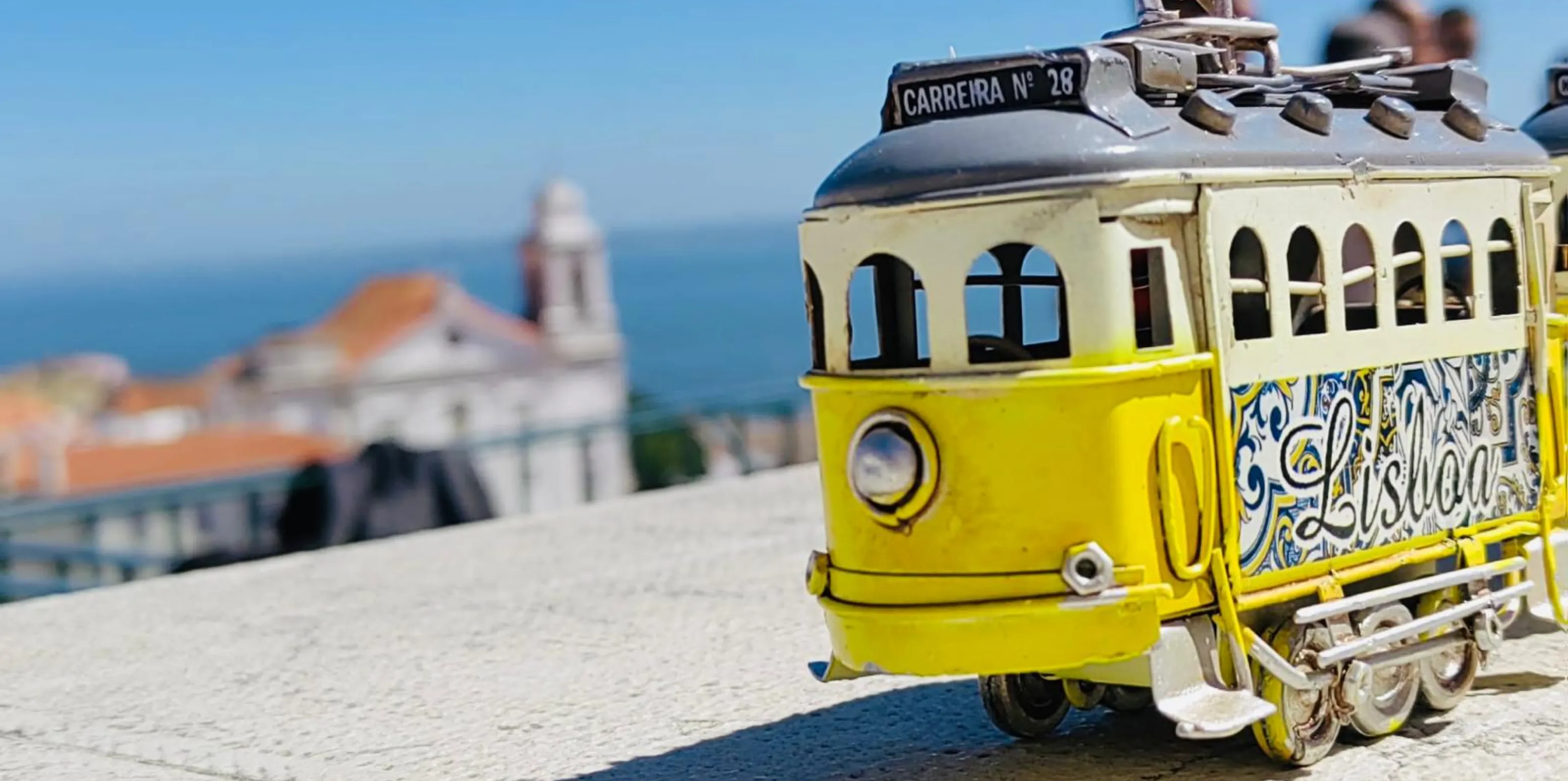
Lines, stops, tips and the one tram ride that every visitor — and every local — should take at least once
Practical Information: Everything You Need to Know Before You Board
Tickets and Payment
Lisbon's trams are operated by Carris, the city's public transport company. The key things to know:
- Never buy a ticket on the tram — you will pay significantly more than the standard fare. Always use a Viva Viagem card, available at any metro station ticket machine.
- A single journey costs around €1.50 when paid with a Viva Viagem card, versus €3.00 or more paid on board.
- The Lisboa Card includes unlimited travel on all Carris trams, buses and funiculars, as well as free or discounted entry to most major monuments. For any visit of two days or more, it is almost always the best value option.
- Cards can be loaded at any metro station. Validate your card on the reader at the tram entrance every time you board.
When to Ride
- Early morning (before 9:00) — the best time for the 28E and the most atmospheric ride on any line; the city is quiet and the light is extraordinary.
- Late afternoon and evening — second best option; the crowds thin and the golden hour light on Lisbon's hills is unforgettable.
- Midday in high season — avoid if possible on the 28E; the 25E is significantly less affected and remains pleasant throughout the day.
Pickpockets
Be aware on the 28E in particular. Keep valuables in a front pocket or secure bag, and be conscious of your surroundings in crowded conditions. The 25E, 12, 18E and 15E have a fraction of the pickpocketing incidents reported on the 28.
Accessibility
The historic Remodelado trams (lines 12, 18E, 25E and 28E) are not wheelchair accessible due to their age and design. The modern 15E tram to Belém is fully accessible and is the recommended option for passengers with mobility needs.
Photography
Photography is welcome on and from the trams. The best shots of the trams themselves are from street level in Alfama (line 28E), along the Chiado descent and at the Estrela stop on the 25E. Early morning light is transformative.
FAQ: Lisbon Trams
Which is the best tram to take in Lisbon? Tram 25E is the best overall tram experience in Lisbon — authentic, scenic, uncrowded and connecting some of the city's most interesting neighbourhoods including the unmissable Cais do Sodré stop. For the classic tourist experience, Tram 28E remains iconic but is best ridden early or late in the day.
Is Tram 28 worth taking in Lisbon? Yes, but with some notes. It's the best well known, but extremely crowded and a known pickpocketing hotspot. Ride it really early in the morning if you go for this option.
How much does a tram cost in Lisbon? Around €1.50 with a Viva Viagem card. Never pay on board — you'll pay double. The Lisboa Card offers unlimited tram travel and is excellent value for multi-day visits.
Are Lisbon's trams accessible? The historic trams (lines 12, 18E, 25E, 28E) are not wheelchair accessible. Tram 15E to Belém is fully accessible.
What is the Cais do Sodré tram stop like? The newly renovated Cais do Sodré stop is one of the most rewarding places to step off the tram in Lisbon — a vibrant waterfront neighbourhood with excellent restaurants, bars and the legendary Chocolatería San Ginés right at the stop, with its rooftop terraza and views over the Tagus.
Do I need to validate my ticket on the tram? Yes — always validate your Viva Viagem card on the reader at the entrance when boarding. Inspectors do check, and the fine for travelling without a valid validated ticket is significant.
There are few more Lisbon experiences than stepping onto one of the city's iconic yellow trams. Creaking through narrow cobblestone streets, negotiating corners that seem physically impossible, climbing gradients that would defeat any ordinary vehicle — Lisbon's historic elétricos are as much a part of the city's identity as fado, pastéis de nata and the River Tagus glittering at the end of every downhill street.
But Lisbon's tram network is more than a nostalgia trip. These vehicles are real, functioning public transport — used by residents every single day — and knowing which lines to take, which stops to use and what to expect makes the difference between a frustrating tourist experience and one of the great urban pleasures of any trip to Portugal.
This is the complete guide to Lisbon's trams: the history, the lines, the essential stops and, above all, the one route that beats them all.
A Brief History of Lisbon's Trams
Lisbon's tram network dates back to 1873, making it one of the oldest in the world. The first horse-drawn cars were replaced by electric trams in 1901, and the network expanded rapidly across the city's seven hills during the early 20th century, at one point covering over 100 kilometres of track.
The network contracted dramatically through the second half of the 20th century as buses and cars took over. Today, only a handful of historic lines remain — but those that do are extraordinary. The surviving routes wind through the parts of Lisbon that no bus or metro can reach: the steep, narrow streets of Alfama, the hillside villages of Estrela and Prazeres, the riverfront at Belém and the newly revitalised waterfront of Cais do Sodré.
The trams that run today are largely the Remodelado model, built between the 1930s and 1960s and lovingly maintained. Stepping aboard one is stepping into a different era — wooden interiors, rattling windows, the smell of warm steel on old tracks — while the city outside the windows is very much the living, vibrant Lisbon of today.
The Active Tram Lines in Lisbon
Lisbon currently operates five historic tram lines, each with its own character, route and rhythm. Here is what you need to know about each one.
Tram 12 — Alfama's Quiet Alternative
Route: Praça da Figueira → Largo Portas do Sol
Tram 12 is Alfama's lesser-known tram — shorter, quieter and far less crowded than its famous neighbour, the 28. It climbs from the Baixa up into the heart of Alfama, terminating at the Largo das Portas do Sol viewpoint with its sweeping views over the neighbourhood and the Tagus. A useful line for reaching the upper parts of Alfama without the crowds of the 28, and a genuinely pleasant ride through some of the city's oldest streets.
Best for: Reaching Alfama viewpoints, a quieter tram experience, combining with a walk through the historic neighbourhood.
Tram 15E — The Modern Belém Express
Route: Praça da Figueira → Algés (via Belém)
The 15E is the odd one out in Lisbon's tram network: a modern, articulated vehicle rather than a historic Remodelado, running on a dedicated track along the riverfront from the city centre all the way to Belém and beyond. It lacks the romance of the historic lines but more than makes up for it in efficiency — it's the fastest and most comfortable way to reach Belém's cluster of UNESCO World Heritage monuments (Jerónimos Monastery, Tower of Belém, Padrão dos Descobrimentos) from the city centre.
Best for: Getting to Belém quickly, families with pushchairs, anyone carrying luggage or with mobility considerations.
Tram 18E — Santos and Ajuda, Off the Tourist Trail
Route: Cais do Sodré → Ajuda
The 18E is one of Lisbon's most underrated tram experiences. Starting at Cais do Sodré and heading west through Santos, Alcântara and up towards the Ajuda neighbourhood, it passes through parts of the city that most tourists never reach. The route climbs steeply through residential streets, past the National Museum of Ancient Art and up towards the Ajuda Palace — a journey through the everyday Lisbon that exists beyond the postcard views.
Best for: Escaping the tourist circuit, exploring western Lisbon, reaching the Ajuda neighbourhood and palace.
Tram 28E — The Famous One (and Its Caveats)
Route: Martim Moniz → Campo de Ourique
The 28E is Lisbon's most famous tram and one of the most photographed public transport vehicles in the world. Its route is genuinely spectacular: from Martim Moniz it climbs through the Mouraria, winds through Alfama, descends through the Baixa and Chiado, crosses Estrela and terminates in the residential calm of Campo de Ourique — a cross-section of Lisbon's history, architecture and neighbourhoods in a single ride.
The honest truth is that the 28 has become a victim of its own fame. In high season — roughly April through October — it is packed to capacity with tourists, and pickpocketing is a well-documented problem on the line. Locals largely avoid it during peak hours. It remains a beautiful route, and the tram itself is a genuine icon — but if you ride it, do so early in the morning or in the evening, when the crowds thin and the experience recovers its magic.
Best for: The classic Lisbon tram experience, crossing multiple historic neighbourhoods in one ride, photography — but choose your timing carefully.
Tram 25E — The Best Tram Ride in Lisbon
Route: Praça da Figueira → Prazeres (via Cais do Sodré, Santos, Estrela)
If there is one tram ride in Lisbon that delivers everything you came for — history, beauty, authenticity, spectacular scenery and zero of the overcrowding that plagues the 28 — it is Tram 25E. This is the line that locals actually take, the route that rewards the curious traveller, and the tram journey that, once experienced, makes all other options feel like a compromise.
The 25E begins at Praça da Figueira in the heart of the Baixa and heads west, passing through some of Lisbon's most interesting and varied urban fabric. The route winds down to Cais do Sodré — the city's buzzing riverside neighbourhood and one of the most energetic parts of contemporary Lisbon — before climbing steeply through Santos, crossing the elegant Estrela neighbourhood with its magnificent basilica, and terminating at the quiet, residential cemetery gardens of Prazeres.
What makes the 25E exceptional is the combination of everything the best Lisbon tram ride should be: the vehicle is a genuine historic Remodelado, the route passes through neighbourhoods ranging from the hip and contemporary to the deeply traditional, the gradients are dramatic without being vertiginous, and the line carries enough local passengers that it retains the authentic neighbourhood feel that the 28 has largely lost.
The Cais do Sodré stop deserves particular attention. This newly renovated stop sits at the heart of one of Lisbon's most transformed neighbourhoods — a waterfront district that has evolved from a working port area into one of the city's most vibrant dining, drinking and cultural destinations. Step off the 25E here and you step directly into the pulse of contemporary Lisbon.
And right at this stop, housed in a building that seems to belong to another era entirely, is one of the city's most rewarding discoveries: the Chocolatería San Ginés. This legendary family business — founded in Madrid in 1894 and now firmly part of the Lisbon landscape — is the home of what many consider the finest churros in the world. The recipes are the originals, carefully maintained across 130 years, but the menu has evolved to embrace Portuguese and South American tastes, with sweeter options alongside the classics and a 100% homemade brunch using the finest local products: freshly baked sourdough, local meats, the kind of ingredients that only a family business with generations of care can consistently source.
Above the chocolatería, accessed by a staircase that feels like a small adventure, is the San Ginés Terraza — a small, intimate rooftop perched on top of the 16th-century Igreja de São Paulo, with views over the rooftops of Cais do Sodré and the Tagus beyond. Signature cocktails, Iberian products, occasional live music and the particular magic of a Lisbon sunset seen from a secret rooftop: it is the kind of place you stumble upon and immediately want to keep to yourself. It can also be booked for private events, for those who want something genuinely special.
Getting off at Cais do Sodré and spending time here before reboarding is, quietly, one of the finest things you can do in Lisbon.
Best for: The definitive Lisbon tram experience, authentic neighbourhood atmosphere, connecting Baixa to Cais do Sodré, Santos and Estrela, avoiding tourist crowds.
Conclusion: Slow Down and Take the Tram
In a city that increasingly rushes — more visitors, faster transport, busier streets — Lisbon's trams are a reminder that the best way to experience a place is slowly, from street level, with the windows open and the city right there beside you.
Take Tram 25E. Get on at Praça da Figueira, find a window seat, and let the city unfold. Step off at Cais do Sodré, follow your nose, and you'll find Lisbon at its most alive. Step upstairs at San Ginés for a churro, a cocktail and a rooftop view that somehow nobody told you about. Get back on the tram. Continue to Estrela, to Prazeres, wherever the line takes you.
That is, in the end, what Lisbon's trams are for.
Found this guide useful? Share it with someone planning their first trip to Lisbon.
Tags: Lisbon trams · trams in Lisbon · Tram 25 Lisbon · Tram 28 Lisbon · Cais do Sodré · Lisbon public transport · elétrico Lisboa · getting around Lisbon
Últimas noticias