Discover what to see and do in Lisbon with this complete guide to 10 unmissable experiences — from historic neighbourhoods to the legendary San Ginés Chocolatería
Discover what to see and do in Lisbon with this complete guide to 10 unmissable experiences — from historic neighbourhoods to the legendary San Ginés Chocolatería
Planning a trip to Lisbon and not sure where to start? Lisbon is one of Europe's most captivating capitals: a city of seven hills, yellow trams, century-old azulejo tiles and a food scene that leaves every visitor wanting more. In this guide, you'll find the 10 best things to do in Lisbon, tailored for both first-time visitors and seasoned travellers looking to rediscover the city with fresh eyes.
Portugal's capital and one of the oldest cities in Europe, Lisbon blends millennia of history with a vibrant contemporary culture and gastronomy. Perched on the banks of the River Tagus, with the Atlantic just under an hour away by car, the city is best explored on foot: climbing steep hills, wandering down cobblestone alleys and stopping at every miradouro — the city's famous viewpoints — to take in the golden light that bathes Lisbon at dusk.
If your time is limited, these are the experiences you simply cannot miss.
1. Getting Lost in the Alleys of Alfama: Lisbon's Most Authentic Neighbourhood
Alfama is Lisbon's historic heart and one of the most photographed and visited neighbourhoods in Portugal. This medieval labyrinth of narrow streets climbs the hillside up to the Sé Cathedral and São Jorge Castle, preserving intact the spirit of old Lisbon.
Alfama survived the devastating earthquake of 1755 thanks to its rocky ground, making it the neighbourhood that best reflects what the city looked like before the disaster. Here, houses press tightly against each other, laundry hangs between balconies, and from the taverns come the melancholic notes of fado — the music of the Portuguese soul, recognised as UNESCO Intangible Cultural Heritage.
Practical tip: Visit Alfama early in the morning or at sunset to avoid the crowds and enjoy the most beautiful light of the day.
2. Watching the Sunset from Miradouro da Graça: Lisbon's Best View
If there is one thing Lisbon does better than almost any other European capital, it's sunsets. The Miradouro da Graça is, for many visitors and locals alike, the finest viewpoint in the city: it offers a sweeping 180-degree panorama that takes in the Tagus, São Jorge Castle, the 25 de Abril Bridge and the Christ the King statue on the opposite bank.
At sunset, the entire city turns shades of gold and amber in a spectacle that no photograph can fully capture. The atmosphere is relaxed and genuinely local — neighbours gather here with a beer and good conversation, far from the tourist masses in other parts of the city.
Practical tip: Arrive about 30 minutes before sunset to find a good spot. The viewpoint is free and open to all.
3. Visiting the Jerónimos Monastery in Belém: A UNESCO World Heritage Site
About eight kilometres from Lisbon's historic centre, the neighbourhood of Belém is an essential stop for any traveller wanting to understand the grandeur of Portugal during the Age of Discovery. The Jerónimos Monastery, listed as a UNESCO World Heritage Site in 1983, is the masterpiece of Manueline architecture: a uniquely Portuguese style that blends Gothic elements with maritime, botanical and exotic motifs brought back from newly explored worlds.
Built in the early 16th century to commemorate Vasco da Gama's voyage to India, the monastery houses the tombs of the explorer himself and of the poet Luís de Camões. Its two-storey cloister, with its extraordinarily detailed ornamentation, is one of the most breathtaking spaces on the entire Iberian Peninsula.
Practical tip: Book tickets online in advance to avoid long queues. Combine the visit with the Tower of Belém, just ten minutes away on foot.
4. Tasting Authentic Pastéis de Nata at the Confeitaria de Belém
Few gastronomic experiences in Lisbon are more iconic than sitting down to a freshly baked pastel de nata (Portuguese custard tart). And nowhere makes them quite like the Antiga Confeitaria de Belém, founded in 1837 and the keeper of the original recipe for the so-called pastéis de Belém.
The perfect combination: a flaky, caramelised pastry shell, a creamy and just-set custard filling, finished with a dusting of cinnamon and icing sugar. Custard tarts are sold in bakeries all over the world today, but nothing compares to the ones from this historic pastry shop just a few steps from the Jerónimos Monastery.
Practical tip: There's always a queue, but it moves quickly. Order at the counter and eat them warm on the spot — that's the only proper way to enjoy them.
5. Crossing the River by Ferry to Cacilhas: Lisbon from the Water
One of the most authentic and least touristy experiences in Lisbon is taking the ferry from Cais do Sodré and crossing the Tagus to Cacilhas on the southern bank. The crossing takes just ten minutes but offers some of the best panoramic views of the city: the entire Lisbon waterfront unfolding before you, with the 25 de Abril Bridge and Christ the King as a backdrop.
Once in Cacilhas, the seafood and fresh fish restaurants are a temptation that's hard to resist. The atmosphere is completely local and prices are noticeably lower than in the city centre.
Practical tip: The ferry ticket costs less than €2. It's one of the best value-for-money experiences in all of Lisbon.
6. Exploring LX Factory on Sundays: Market, Culture and Creativity
LX Factory is the most creative and cosmopolitan space in contemporary Lisbon. Set in a 19th-century industrial complex beneath the 25 de Abril Bridge, it hosts one of Portugal's most special markets every Sunday: stalls of independent design, second-hand books, local crafts, international food and live music performances.
It's the ideal place to bring home something truly unique: contemporary Portuguese ceramics, artisan jewellery, natural textiles or original illustrations by local artists. The Sunday atmosphere is festive and laid-back, with Lisbonites of all ages mingling with curious travellers who have found this off-the-beaten-track gem.
Practical tip: Arrive before 11am to make the most of the morning. The best stalls tend to get busy before noon.
7. Riding Tram 28: Lisbon's Iconic Yellow Tram
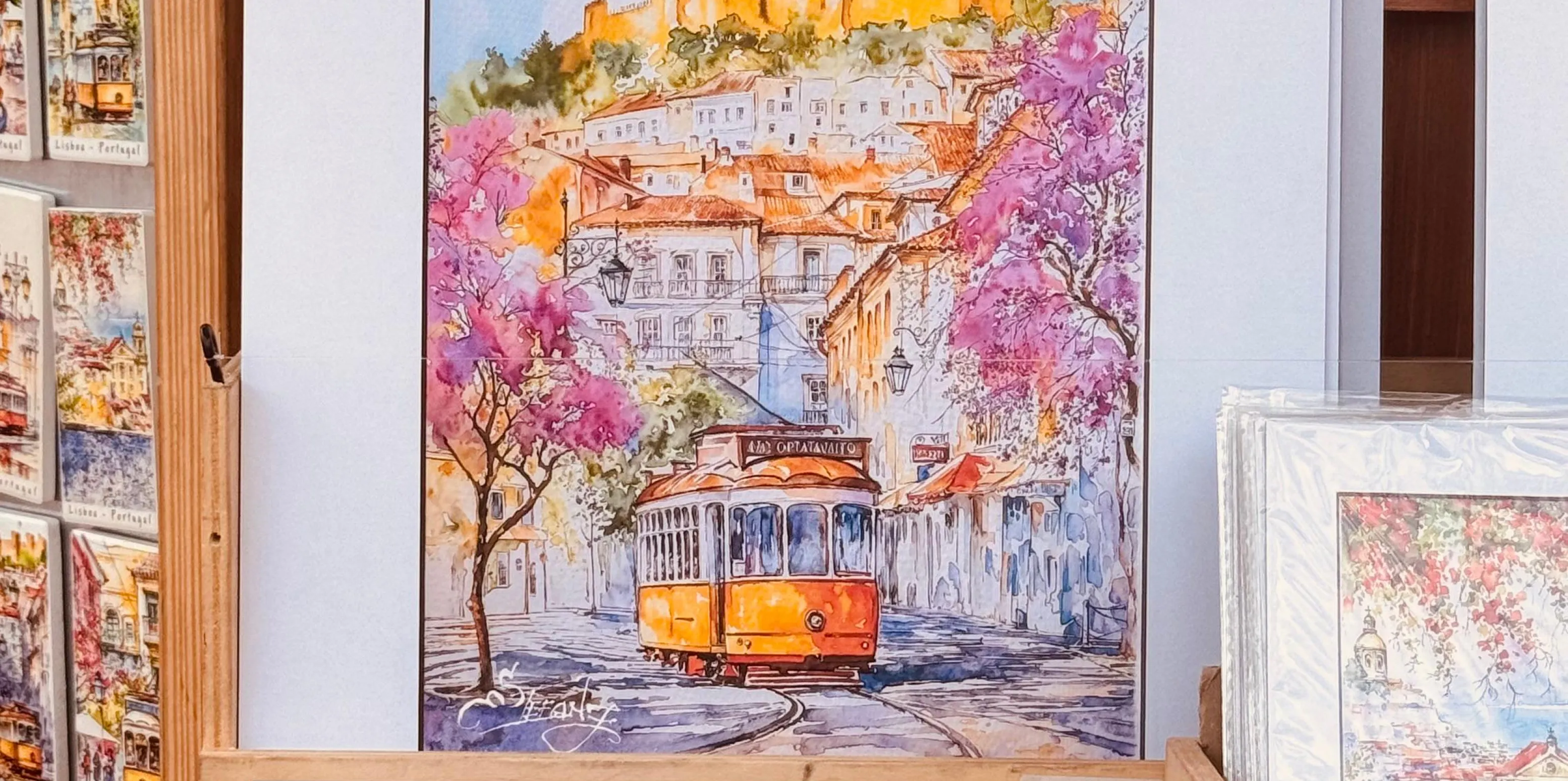
Tram 28 is one of Lisbon's most recognisable symbols and, beyond its considerable photogenic charm, it remains a fully functioning public transport route. From Martim Moniz to Campo de Ourique, it winds through Alfama, Mouraria, Baixa and Chiado, climbing and descending hills with an energy that feels like it belongs to another era.
Watching this historic tram negotiate impossible curves and narrow streets with millimetric precision is a spectacle in itself. It's one of those small, everyday moments that become travel memories for life.
Practical tip: Avoid riding between 10am and 4pm during high season — the tram is packed with tourists and pickpockets are a genuine concern. Ride very early or at sunset to truly enjoy the experience.
8. Exploring the National Tile Museum: Art Unique to Portugal
The azulejo tile is the most defining element of Portuguese visual identity, and nowhere in the world celebrates it more deeply than the Museu Nacional do Azulejo (National Tile Museum) in Lisbon. Housed in a 16th-century convent, the museum traces five hundred years of history of this ceramic tradition, from its Islamic origins to the most contemporary expressions.
The highlight of the collection is an enormous panoramic tilework panel depicting Lisbon before the 1755 earthquake — a window into the past of astonishing beauty and detail. The convent itself, with its Baroque cloister and tile-covered church, is already a work of art in its own right.
Practical tip: The museum is a short distance from the city centre — take the bus or a taxi. Allow at least two hours for the visit.
9. Experiencing a Fado Night in Mouraria or Bairro Alto
Fado is the soundtrack of Lisbon. Born in the popular neighbourhoods of the Portuguese capital in the early 19th century, this music embodies saudade — that untranslatable feeling of melancholic longing that defines the Portuguese soul. Recognised as UNESCO Intangible Cultural Heritage in 2011, fado is best experienced in a small, intimate tasca, with a fadista's voice cutting through the silence and the Portuguese guitars answering in conversation.
Mouraria — the neighbourhood where fado was born — and the Bairro Alto are the best places to live this experience authentically. Do your research beforehand and choose fado houses with local musicians to avoid the overly commercialised tourist shows.
Practical tip: Most fado performances start from 9pm. Book a table in advance, especially during high season (June to September).
10. Churros with Hot Chocolate at San Ginés Chocolatería Lisbon
No visit to Lisbon is complete without a stop at San Ginés Chocolatería, one of the most beloved institutions in Iberian gastronomy. Founded in Madrid in 1894, San Ginés arrived in Lisbon bringing with it almost 130 years of chocolate-making tradition and the original recipe for one of the Peninsula's most irresistible pleasures: churros dipped in rich hot chocolate.
San Ginés chocolate is thick, intense and velvety, made according to a recipe that has remained unchanged for generations. The churros — crispy on the outside, fluffy on the inside — are perfect for dipping and savouring at a leisurely pace. The atmosphere inside invites you to linger over a second cup, losing track of time while the city carries on outside the windows.
But San Ginés in Lisbon has an added dimension that makes it an even more special visit: its San Ginés Terrace. Set in a privileged location with sweeping panoramic views over the city, the rooftop terrace has become one of Lisbon's most sought-after spaces for private events, celebrations and exclusive gatherings. World-class gastronomy combined with the privilege of seeing Lisbon from above: an experience that, once lived, is impossible to forget.
Practical tip: San Ginés is perfect for breakfast, afternoon tea or a weekend brunch. If you're looking to host a private event on the terrace, enquire about their exclusive packages in advance.
Frequently Asked Questions About Lisbon (FAQ)
How many days do I need to visit Lisbon? Three days is enough to cover the essentials. Five days or more allows you to explore at a relaxed pace and make day trips to Sintra or Cascais.
What is the best time of year to visit Lisbon? Spring (March–May) and autumn (September–November) offer the best weather with fewer crowds. June and July are the peak tourist months.
Is Lisbon an expensive city? Compared to other European capitals like Paris or London, Lisbon remains relatively affordable, particularly for dining out and public transport.
How do I get around Lisbon? The metro is the fastest option for longer distances. For the historic neighbourhoods, walking is best — or use the historic trams and funiculars.
Where can I find the best churros with hot chocolate in Lisbon? Without question, at San Ginés Chocolatería — with almost 130 years of history and the original recipe for the most authentic hot chocolate on the Iberian Peninsula.
Conclusion: Lisbon, a City You'll Carry With You Forever
Lisbon is not a city you visit and forget. It's a city that stays with you, that appears in your dreams, and that makes everyone who knows it look for any excuse to come back. Its golden evening light, its unique blend of faded grandeur and vibrant energy, its welcoming people and its generous cuisine make for a travel experience that few European capitals can match.
Whether you're coming for a long weekend or allowing yourself the luxury of a full week, Lisbon will always have something more to offer: a street you haven't explored yet, a viewpoint you didn't know about, a cup of hot chocolate and churros you'll never forget.
Found this Lisbon travel guide useful? Share it with someone planning their next trip to Portugal's capital.
Tags: things to do in Lisbon · what to see in Lisbon · Lisbon travel guide · Lisbon tourism · San Ginés Chocolatería Lisbon · San Ginés Terrace · travel to Portugal
Últimas noticias